


Research Articles
Explore peptide science, laboratory testing and the documentation behind each batch. Our guides explain Certificates of Analysis, purity, peptide quantity, storage and handling in plain language, with links to scientific sources. Start with the COA guide below, or browse the library by subject.
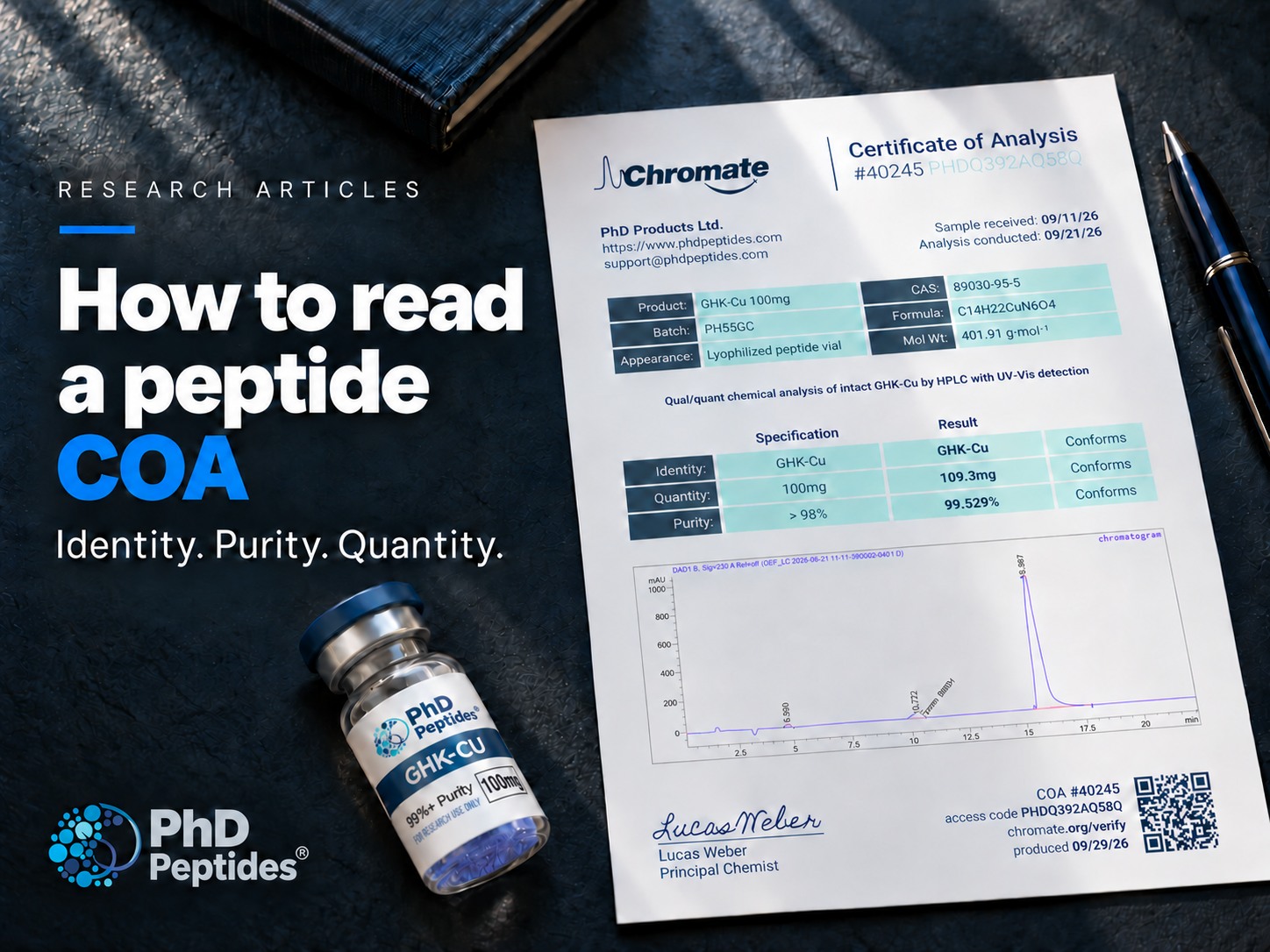
How to Read a Peptide COA
Read a real GHK-Cu certificate with confidence. A practical guide to batch codes, purity, the remaining percentage and measured quantity.
Read the article · 4 min readExplore the library
Choose a starting point: understanding your COA, storage and handling, or peptide identity and specifications.
20 articles
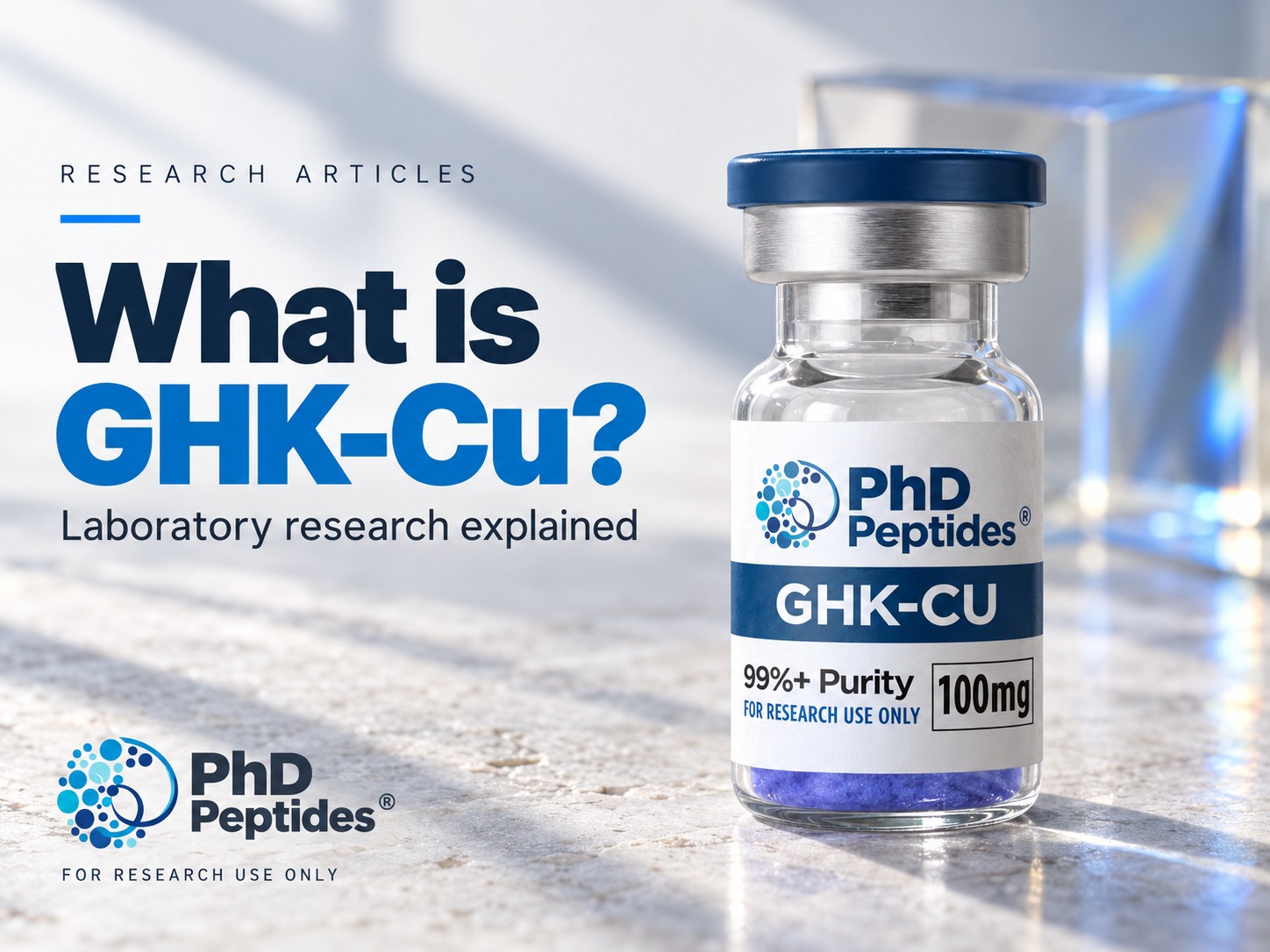
GHK-Cu: The Blue Copper Peptide
A clear laboratory guide to GHK-Cu, its blue appearance, copper coordination and the product and batch information researchers should read.
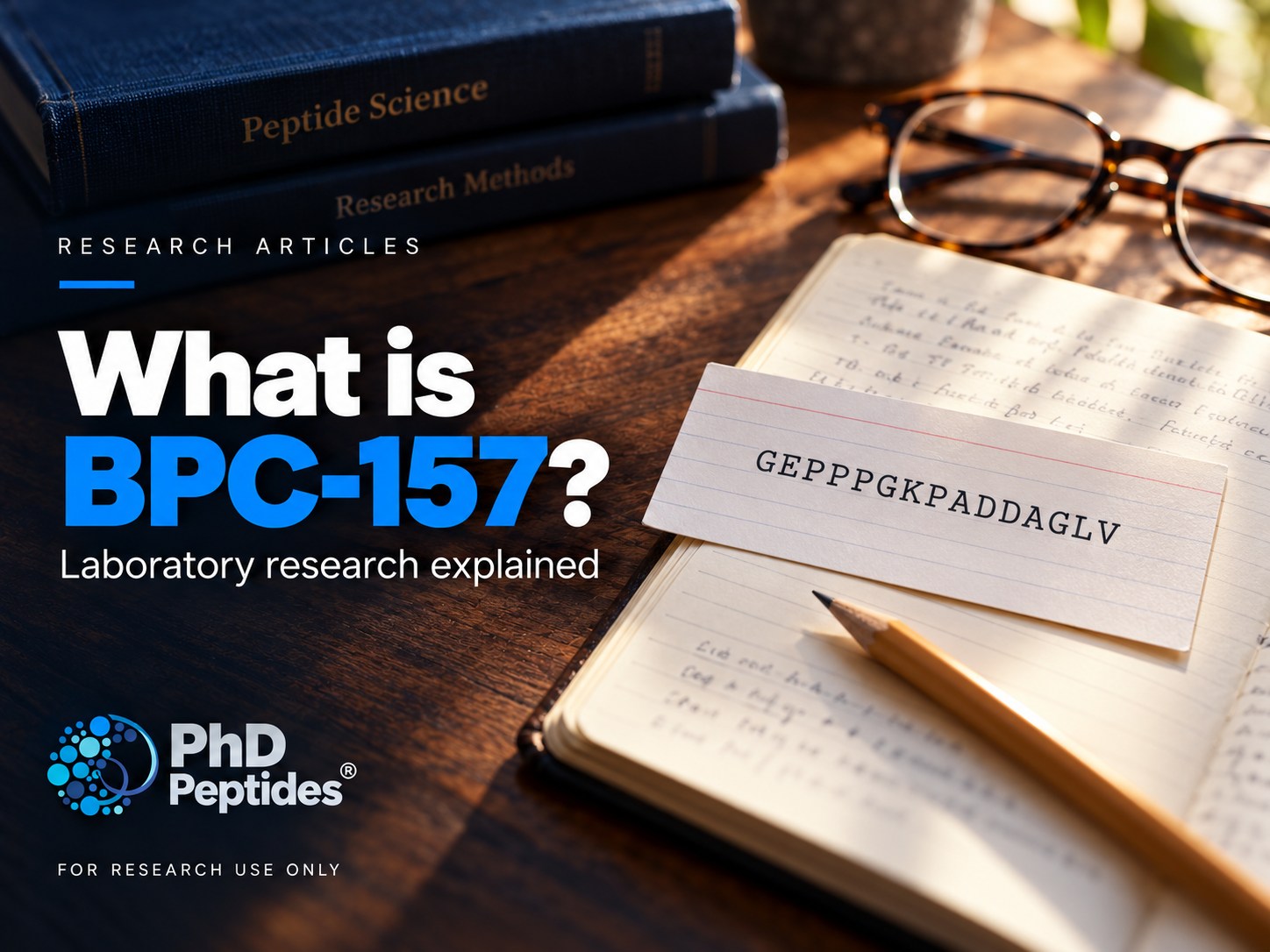
BPC-157: Structure and Research
Understand BPC-157 as a synthetic research peptide, from its 15-amino-acid sequence to analytical reports and PhD Peptides batch documentation.
What Is MOTS-c?
Understand MOTS-c, its mitochondrial research background and the details to check when reviewing a PhD Peptides batch.
What Is NAD+?
A clear guide to NAD+, NADH and related molecules, with practical links to PhD Peptides product information and batch documentation.
How to Read a Peptide COA
Read a real GHK-Cu certificate with confidence. A practical guide to batch codes, purity, the remaining percentage and measured quantity.
What does HPLC purity mean?
What a peptide HPLC purity percentage measures, where the remaining percentage comes from and how to read the chromatogram.
Purity vs quantity
A practical guide to peptide purity, quantity and net content, with a real GHK-Cu batch example.
Independent peptide testing
How to assess an independent peptide report, match it to your batch and keep useful evidence for your research.
Every batch has a story
Why peptide batch numbers matter, how to match a vial to its COA and a practical record template for your laboratory.
Why peptides are freeze-dried
How freeze-drying works, why peptide cakes can look different and what the dry form means for storage and documentation.
How to Store Research Peptides
A practical guide to storing dry research peptides, limiting moisture exposure and keeping a useful batch history.
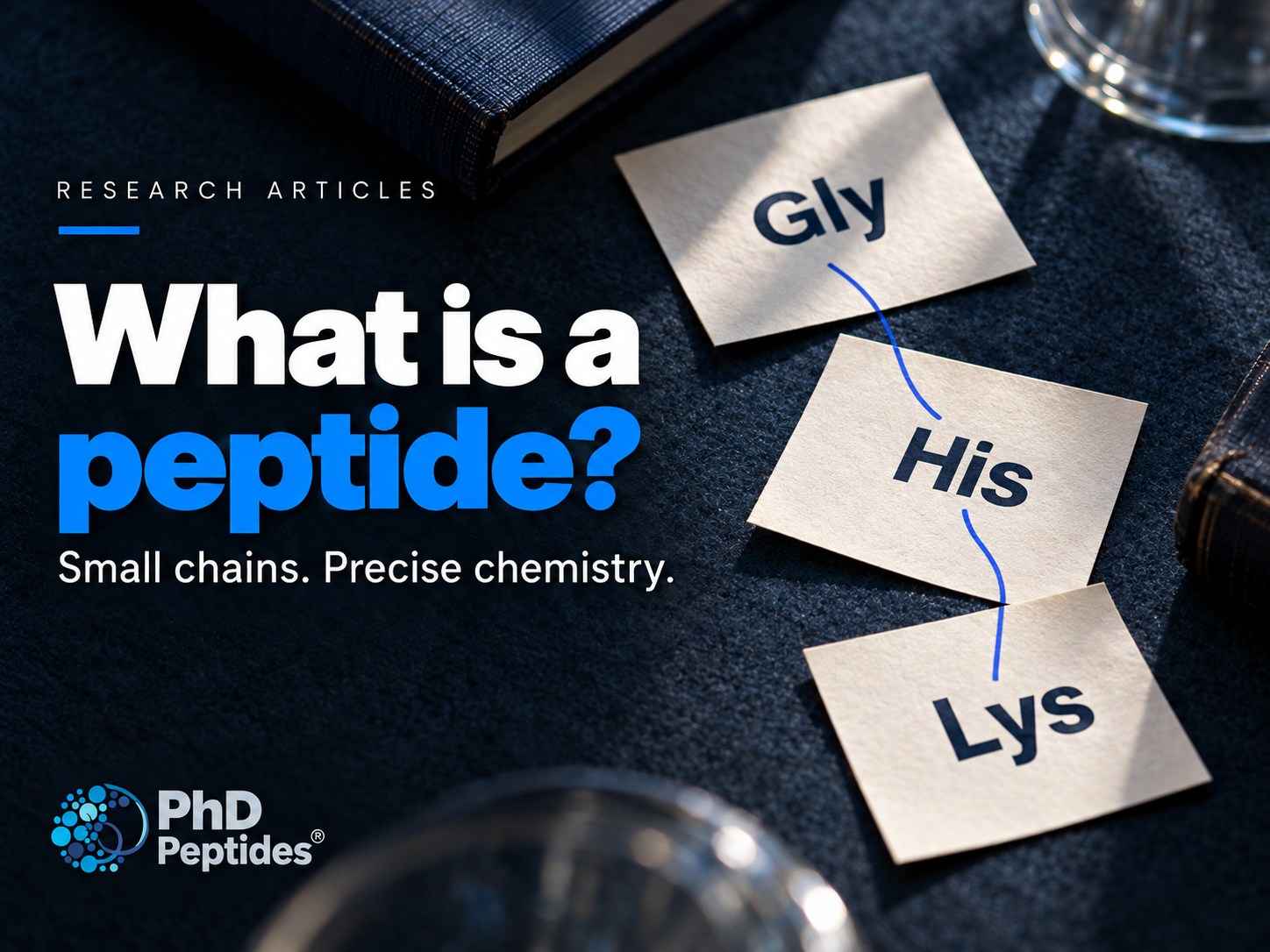
What Is a Peptide?
An accessible introduction to amino acids, peptide bonds, sequences and the information to check before laboratory research.
Sequence, Mass and CAS Numbers
A practical explanation of sequence, molecular mass, modifications and CAS identifiers for research peptide specifications.
Choosing the Right Laboratory Water
How to compare laboratory water grades, composition and documentation for peptide research and analytical methods.
Peptide Solubility: Before You Start
A clear introduction to peptide solubility, including sequence, pH, aggregation and the importance of method compatibility.
Peptide Stability: What Changes with Time?
Understand peptide stability, the difference between solid and solution, and the handling records that help make laboratory results easier to compare.
How Mass Spectrometry Identifies a Peptide
Why a peptide can produce several mass-spectrum peaks, what MS/MS adds, and how to read an identity result alongside HPLC purity.
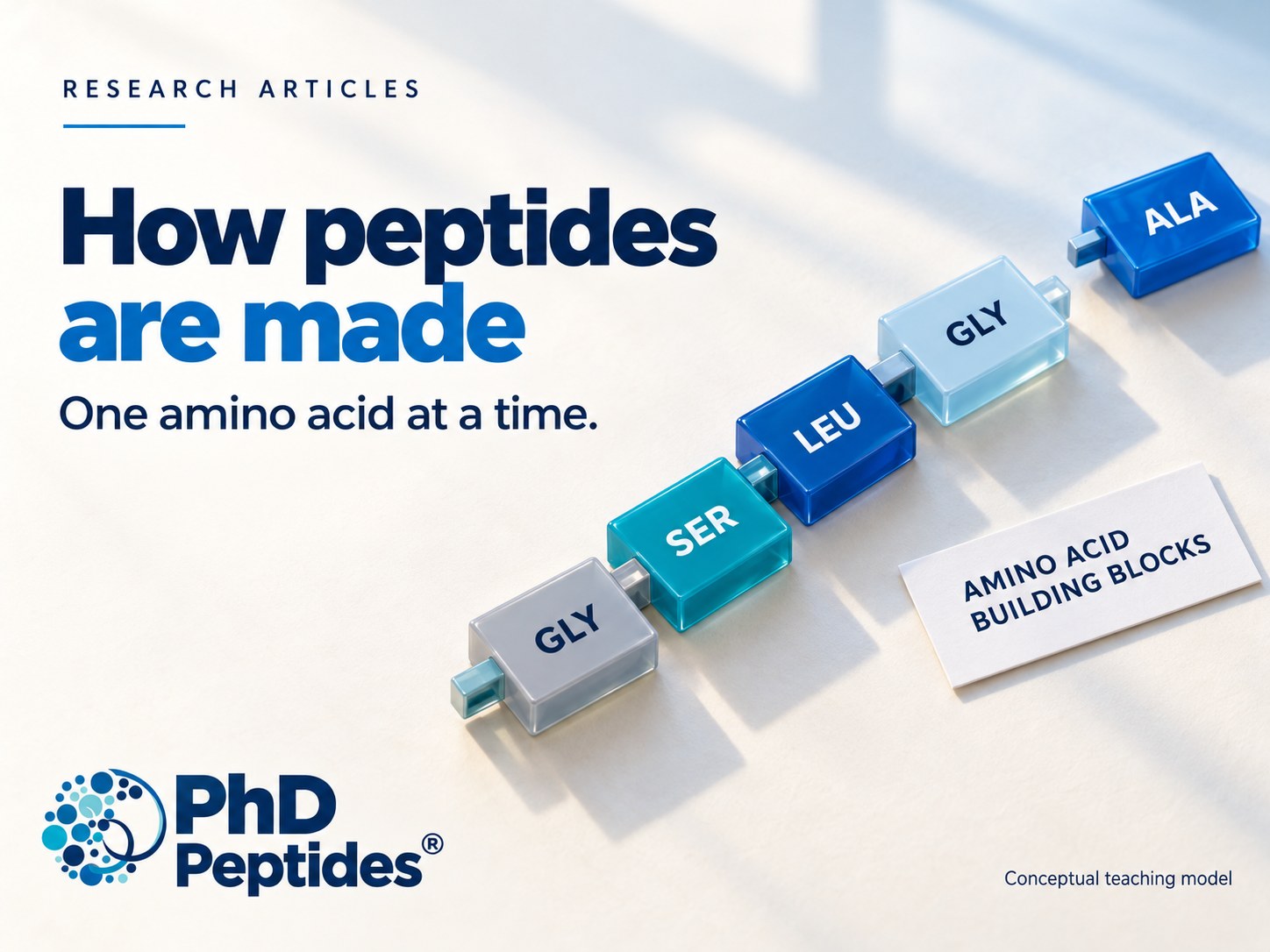
How Peptides Are Made
Explore solid-phase peptide synthesis, protecting groups, purification and the analytical results that turn a planned sequence into documented research material.
Read a Peptide Research Paper with Confidence
A practical reading guide for new researchers, covering figures, methods, peptide identity, repeats and notes you can use later.
COA, SDS or COSHH: Know the Difference
Understand how certificates of analysis, safety data sheets and COSHH assessments fit together when receiving and working with research peptides.
No matching articles. Try another subject or clear the search.