


What Is BPC-157? Structure, Sequence and Laboratory Research
What Is BPC-157? Structure, Sequence and Laboratory Research
Get to know this 15-amino-acid research peptide through its sequence, analytical identity and batch documentation.
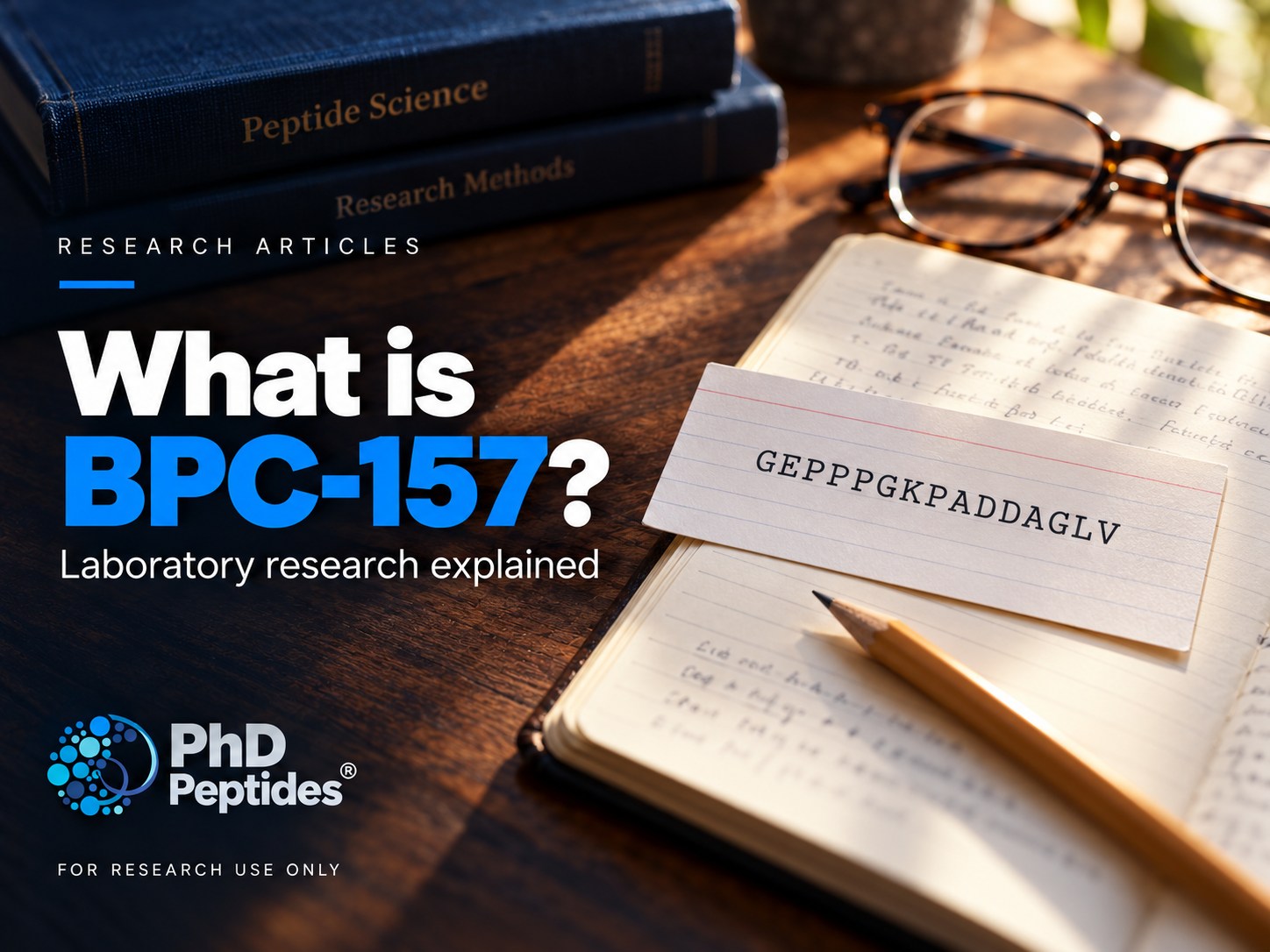
BPC-157 is a familiar name in research peptide catalogues. The useful starting point is its chemical identity: a synthetic peptide with a defined sequence of 15 amino acids. Understanding that sequence makes the product specification, analytical report and research literature much easier to navigate.
For laboratory and analytical research only. Not for human or veterinary use. PhD Peptides supplies research materials for qualified researchers, not products for personal, cosmetic or clinical use.
Here we look at BPC-157 as a laboratory material: what the name identifies, what researchers should record and how the PhD Peptides BPC-157 5mg page connects a vial to its batch documentation.
What is BPC-157?
BPC-157 is a synthetic research peptide. The PubChem record identifies a 15-residue sequence, the molecular formula C62H98N16O22 and an average molecular weight of approximately 1419.5 g/mol for the listed peptide structure.[1] “Residue” is the word chemists use for an amino acid once it is part of a peptide chain.
You may also see the word pentadecapeptide. It simply means a peptide containing 15 amino-acid residues. There is no need to learn the longer word to read a report, but recognising it helps when searching a scientific database.
A product name is the beginning of identification. The sequence, terminal groups and supplied form provide more detail. Keeping those fields together is especially helpful when comparing a reference database, a publication and a supplier’s specification.
A useful first notebook entry: material name, supplier, batch code and certificate reference. Add the molecular details needed for your study from the relevant specification.
Read the BPC-157 sequence in small groups
Peptides consist of amino-acid units linked through peptide bonds.[2] Their sequence is conventionally read from the N-terminal end to the C-terminal end. BPC-157’s one-letter sequence is GEPPPGKPADDAGLV. Grouping those 15 letters makes the pattern easier to check.[1]
The letters are standard amino-acid abbreviations rather than initials invented for this product. For example, G means glycine, P means proline and K means lysine. A repeated letter is a repeated residue, not a typographical error.
This is why a sequence is more informative than a description such as “a short peptide”. It specifies the order of the building blocks. A peptide with one residue missing or the same residues arranged differently is a different chemical structure.
For a broader introduction to the notation, see our guide to peptide sequences, molecular weight and CAS numbers. It explains how to use those identifiers together without expecting any single number to describe the whole product.
What can analysis tell you about a batch?
Analytical work turns a catalogue identity into evidence about a sample. The useful questions are concrete: does the tested sample meet the stated identity requirement, what purity was reported, and is a quantity result available?
For synthetic peptides, chromatography can separate the intended material from related components. These may include shortened sequences or other by-products formed during synthesis or subsequent handling. Separation depends on both the peptide and the method; the same column conditions are not automatically ideal for every sequence.[3]
It helps to read the result alongside its method rather than judging the percentage in isolation. A report’s identity field, chromatogram and quantity measurement make different contributions to the overall picture.
| Question | Useful report detail |
|---|---|
| Which material was submitted? | Product name, sample reference and batch code |
| What was established about identity? | The stated identification result and method |
| How was purity assessed? | Analytical method, reported result and specification |
| How much was reported? | A separate quantity result with units, where provided |
Method details matter for repeat work, too. Column selection, temperature and the liquid used in chromatography can change separation behaviour. An official Waters study illustrates how these choices are considered during peptide method development.[5]
For a new researcher, the practical response is straightforward: retain the complete report. A screenshot of the headline purity number is convenient, but the complete document preserves the context you may need later.
How to approach a BPC-157 research paper
Begin with the methods section before trying to compare conclusions. Establish what material the authors used, the experimental system, the controls and what was actually measured. This gives you a clear frame for interpreting the paper.
For laboratory research planning, it is useful to separate three layers: the chemical identity of the material, its behaviour under the study conditions and the authors’ interpretation. A result belongs to the conditions in which it was obtained. It is not an instruction for human use.
A simple reading worksheet can keep that distinction visible:
- Material: What sequence, form, source and purity information are given?
- Method: Which analytical or in vitro system was used, and what controls were included?
- Measurement: What was the readout, and how was it compared?
- Relevance: Which part of the method or finding is useful to your laboratory question?
The general principle is that an analytical procedure should be suitable for its intended purpose. ICH Q2(R2), published by the FDA, describes characteristics used to evaluate analytical procedures, including specificity, accuracy and precision where relevant.[4] We cite it for the measurement principles, not as a claim that a PhD Peptides product has regulatory approval.
Our research-paper reading guide provides a fuller route through the methods, figures and references.
From the PhD Peptides product page to your research record
PhD Peptides supplies BPC-157 5mg as a lyophilised research material in a sealed, batch-coded vial. The product page presents the specification and a link to the current Certificate of Analysis, so the documentation can be reviewed alongside the material.
Before ordering, compare the specification with your study’s requirements. When the vial arrives, match its batch code to the certificate in the COA Library. Save that report with your laboratory record rather than assuming that a later website update will describe the same batch.
Record the storage and handling conditions required by the product information and your laboratory procedure. Note receipt and opening dates, and keep the material clearly identified throughout the work. These small steps make it much easier to trace an observation back to a specific vial and report.
For help reading the numbers, our COA guide explains how identity, purity and quantity fit together. The aim is a clear chain from the product you select to the evidence you retain.
BPC-157 research questions
How many amino acids are in BPC-157?
The defined BPC-157 sequence contains 15 amino-acid residues. Its one-letter sequence is GEPPPGKPADDAGLV.
Does a BPC-157 purity percentage state the quantity in the vial?
No. Purity and quantity are distinct results. Read the report’s methods and units, and use its quantity result where one is provided.
Can PhD Peptides BPC-157 be used by people or animals?
No. It is supplied solely for laboratory and analytical research, not for human or veterinary use, consumption or clinical procedures.
Sources and further reading
- NIH PubChem: BPC-157, CID 9941957
- IUPAC Gold Book: Peptides
- Waters: Synthetic Peptide Impurity Analysis on Reversed-Phase Columns
- FDA / ICH Q2(R2): Validation of Analytical Procedures
- Waters: Method Development and Transfer of Synthetic Peptide Impurity Analysis
For laboratory and analytical research only. Not for human or veterinary use. Scientific references explain the chemistry and analytical principles; they do not imply approval or endorsement of PhD Peptides. Read our Research Use Only policy.
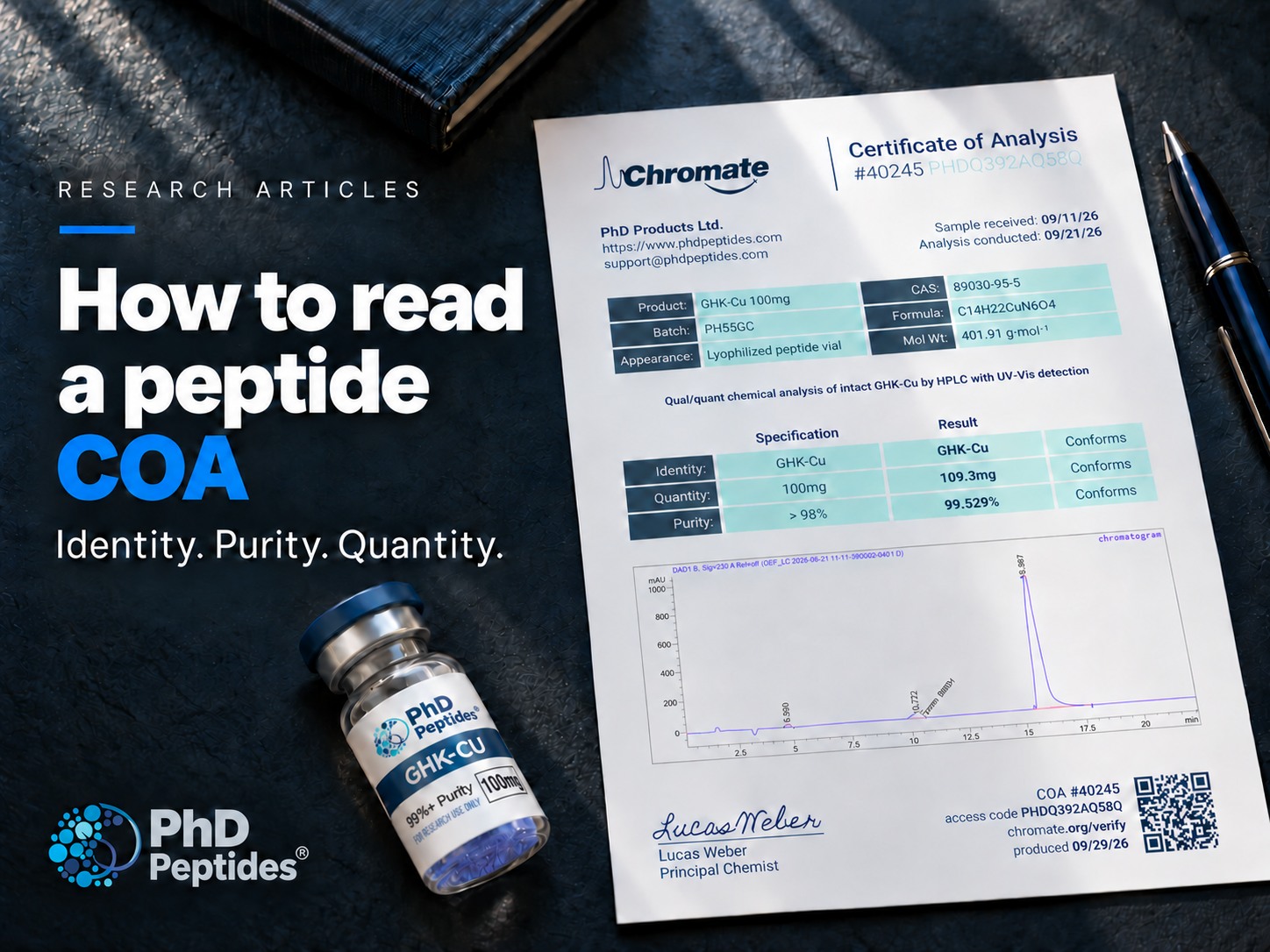 How to Read a Peptide COA
 Peptide Sequence, Molecular Weight and CAS Numbers Explained