


Why Batch Traceability Matters in Laboratory Research
Quality & Documentation
Why Batch Traceability Matters in Laboratory Research
When an experimental result changes, the batch history can turn a vague suspicion into a question worth investigating. Follow the connections that make this possible.
A laboratory reference. No dosing or administration guidance.
Batch traceability connects the material received with its analysis, laboratory preparations and experimental results. When a result changes, those connections help a researcher reconstruct what happened and identify the questions worth investigating.
A familiar assay starts behaving differently. The instrument settings appear unchanged, the method has the same title, and the peptide name on the vial is familiar. Somewhere in the history of the experiment, however, something may have changed.
This is where batch records become practical. They let a researcher move from “we used the same peptide” to a more useful account: which material was received, which report described it and which preparation entered each run. Traceability gives that investigation a starting point.
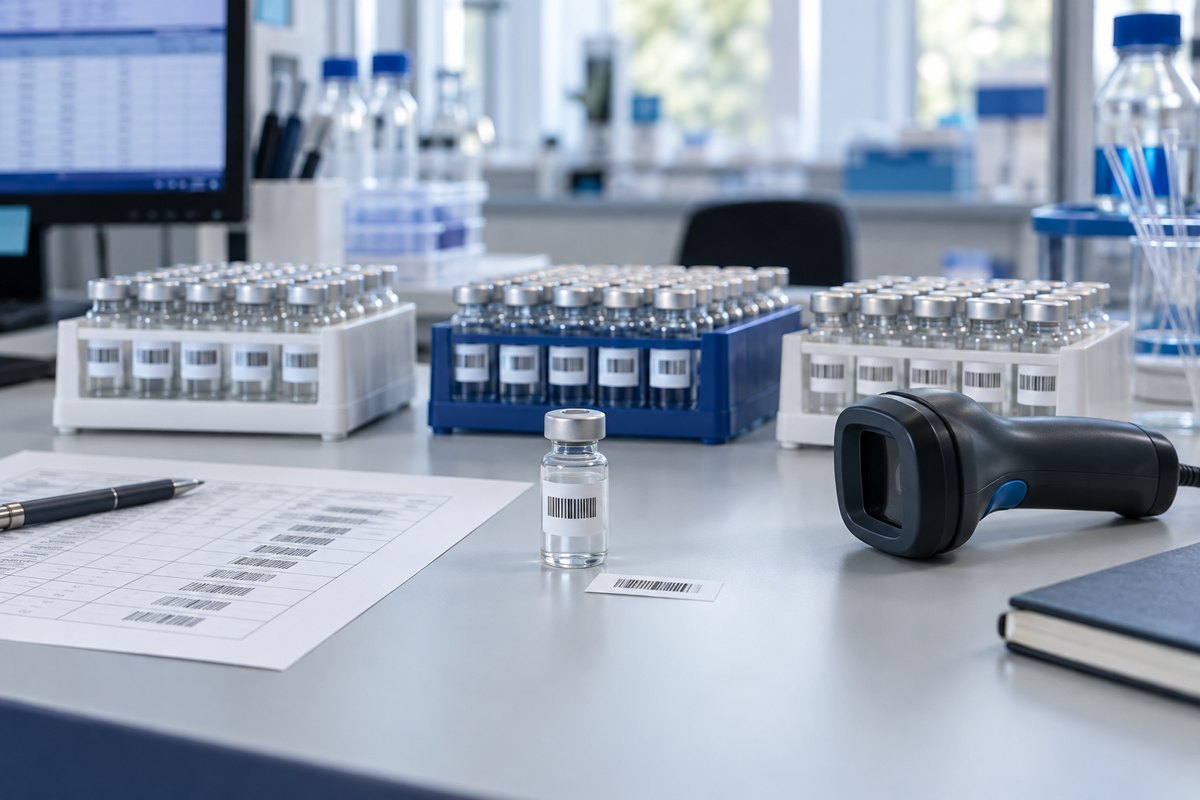
The name identifies the material; the batch identifies its history
A compound name is useful for choosing and discussing a reagent. It is less useful for reconstructing a particular series of experiments. Batch identifiers connect a defined supply of material with its records, so a later review can distinguish separate receipts of the same named compound.
The laboratory usually adds further identifiers: a receipt code, an analytical sample code, a preparation reference and an experiment number. These can all refer to connected material without being identical. Their value comes from the links between them.
NIH’s authentication guidance recognises that key resources can vary over time or between laboratories in ways that affect research. It also retains the expectation of an authentication plan when an outside source supplies prior data. Batch-level documentation helps a laboratory place that evidence in its own research context. NIH: authentication of key research resources.
Keep the identifiers connected
Compound and vial batch
Laboratory sample and report version
Supplier and inventory record
Material used and experimental record
Traceability links records. It does not replace analytical testing.
A changed signal becomes a clearer question
Without these links, the investigation might stop at a general recollection that a new delivery arrived “around that time”. With them, the researcher can associate each run with a particular source container and preparation.
The important result of good record keeping is therefore a better question. Did the material differ? Did preparation change the observation? Does the analytical system need checking? A batch code does not decide among these possibilities; it helps prevent them from being confused.
Two kinds of traceability support the same experiment
Material traceability follows the physical sample and its history. Metrological traceability follows a measurement result back to an appropriate reference through a documented calibration chain. NIST treats the latter as a property of a specific result, rather than something automatically supplied by an instrument or reference-material name. NIST: metrological traceability.
The distinction becomes clear in a quantitative study. The batch record explains which vial was examined. The calibration evidence explains how a content value was assigned. A strong link in one chain does not repair a missing link in the other: a well-measured amount still needs the right sample identity.
A useful record follows the work as it happens
At receipt, the researcher has the supplier description, batch code and physical container. During the evidence review, the original report is associated with that receipt. When material enters a preparation, the new preparation reference points back to the source container. The experiment then points to the preparation used.
This does not require every identifier to appear on every line of a notebook. It requires the relationships to be recoverable. A reader following the experiment backwards should be able to reach the relevant material and evidence without relying on someone’s memory.
Handling observations belong in this history too. If something departs from the applicable laboratory procedure, a contemporaneous note explains the event much better than a retrospective guess. The record should describe what was observed, while an explanation remains a separate conclusion.
Keep the original evidence when information changes
MHRA describes data-integrity principles through ALCOA: attributable, legible, contemporaneous, original and accurate. Its guidance concerns regulated activities, but the record qualities provide a useful reference for research practice. They help explain why authorship, timing and original evidence matter. MHRA Inspectorate: data-integrity principles.
Imagine that the laboratory issues a corrected certificate after an experiment has finished. Saving only the new version would make the current record look tidy, but it would hide what the researcher understood at the time. Keeping both versions and the reason for the correction preserves that distinction.
The same idea applies when a local identifier changes. An old-to-new link is more informative than replacing the earlier code everywhere. Traceability is a history of the work, rather than merely a list of its latest labels.
Transfers add another part of the story
When material moves between people, locations or laboratories, the transfer can become part of its interpretation. The UK Forensic Science Regulator’s code provides a formal example of unique sample identification and documented custody. That framework governs specified forensic activities; ordinary peptide research need not be described as subject to it. Forensic Science Regulator: sample records and custody.
A proportionate research record captures the connections that matter to the work: what was transferred, its identifiers, its destination and the associated evidence. For an external analysis, the submission reference links the laboratory’s sample code back to the received material.
Traceability earns its value when someone else can follow it
The best test of a record is a colleague trying to understand the experiment later. Can they find the source batch, relevant certificate and preparation history? Can they separate an observation from the explanation proposed at the time?
When those answers are available, a changed result becomes easier to investigate and a repeated experiment easier to describe. That is the practical value of batch traceability: a clear path from the result back to the material that helped produce it.
The connections that matter
- Link the received batch with its original analytical report.
- Connect preparations and experiments to the source material.
- Keep physical history distinct from calibration traceability.
- Preserve earlier information when documents or identifiers change.
Sources and reading
Laboratory scope: This article concerns research records and analytical interpretation. It provides no human or veterinary use guidance and makes no claim of regulated status for a laboratory or research material.